
A Spring Night's Dream
A collection of Poetry, Heian and Modern
One of the best things that came from my “retreat” into history, post-COVID, was I discovered the poetry of Japan’s Heian and Nara periods, which lasted from 710 AD to around 1185 AD, give or take. Combined, the Heian and Nara periods make up one of the great literary golden ages in human history.
What’s more remarkable (and it’s telling that it’s remarkable) the literature of the era was dominated by women. In fact, for about a century—most of the 10th and the beginning of the 11th—all the notable poets and authors were women. These include Murasaki Shikibu who wrote the Tale of Genji, usually considered the world’s first great novel, and Sei Shōnagon, who wrote The Pillow Book. Those two books have been the twin pillars of Japanese literature for the last 1000 years and I don’t think you can overestimate their importance in Japanese society, even now. The fact they were written by at the same time, in the same place (the Heian imperial court) by two women who knew each other is mindboggling. And they weren’t the only two literary and poetic geniuses all living under the same roof then!
I fell in love with these women’s poetry. Most of it is love poetry and it’s passionate, philosophical, and deeply erotic. Not since Sappho has anything like it been written. I was entranced.
And it made me want to do something. I wasn’t sure if I should even try, it seemed so …hubristic. But I got some encouragement, including from Riley Rose (thank you again, Riley!), and I went for it. The result is a collection of Heian-era poems and my “replies” (if you will), which I illustrated, to make it into a “story” I’ve called A Spring Night’s Dream.
The full volume of 30 illustrated poems, with biographical notes on the Heian women poets is free to all paid subscriber. It’s exclusive—you won’t find it elsewhere. I’ve pasted my Foreword below.
If you’re a paid subscriber and like poetry, I hope you’ll enjoy it. If you’re not, maybe you’d like to become one and check it out? And just so you know, many of the illustrations are “NSFW,” as they say. You’re reading this, I assume you’re OK with that, but I want to make it clear.
Here’s the Foreword and the first poem (from which I took the title), with the images that introduce them.
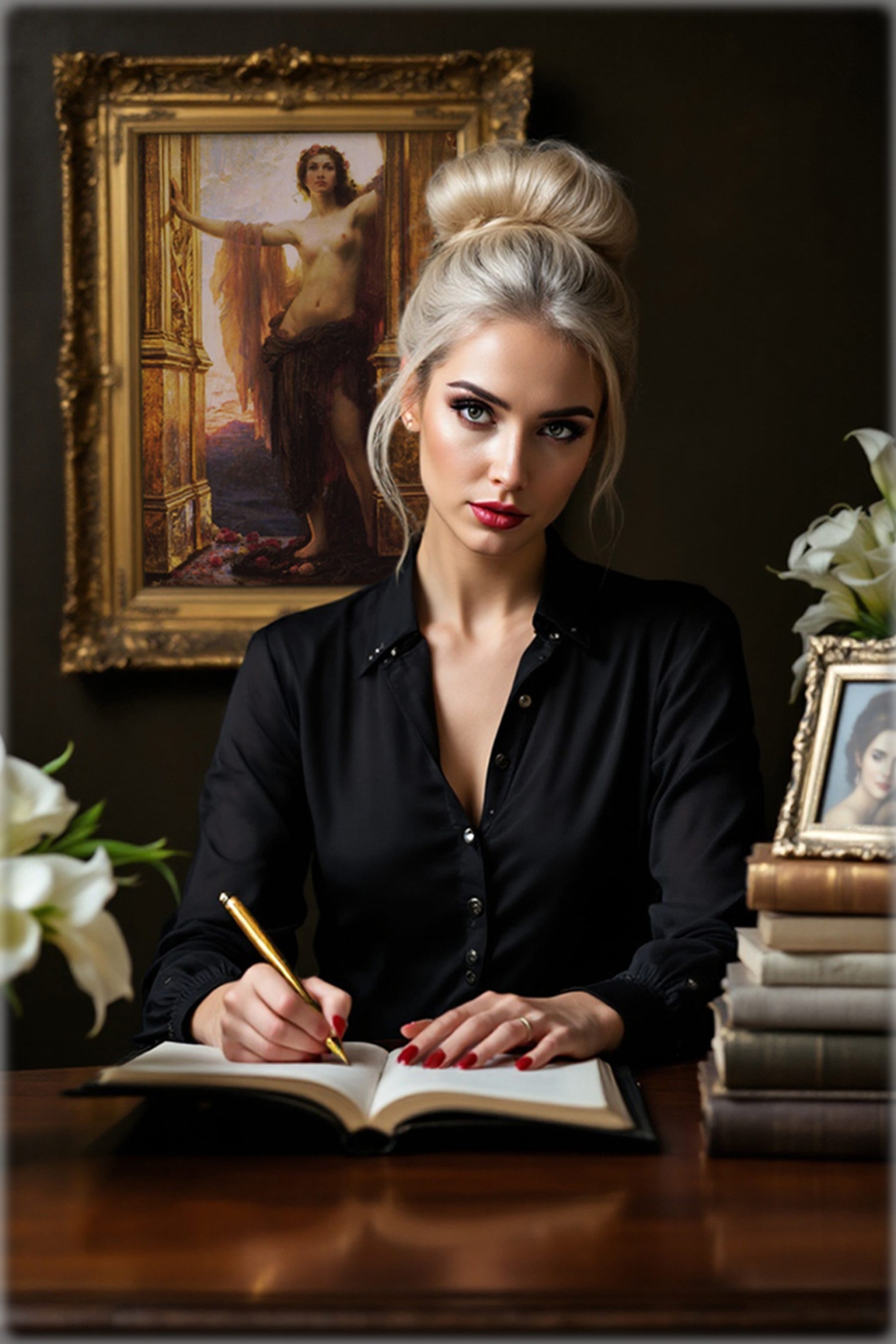
Foreword
Dear Reader, thank you for opening this book and allow me to be your guide, or perhaps I might say, chorus, to these poems. I promise to be brief, but if you’ll allow me, I’d like to begin with a few words:
Love is universal, and love poetry shares this universality. The Japanese women poets of the Heian era raised the poetry of love to its highest point since Sappho. Where touch, the ultimate expression of love, is not possible, poetry provides the means to carry its message between lovers and to crystallize our innermost thoughts and private passions, rendering them timeless.
Love is eternal, even if we are not. It spans all times and erases all distances, enabling that supreme act of courage: that life has worth, it has meaning; it is Good regardless of all the evidence to the contrary. So we love anyway, despite the pains, despite the loss, which is the price of love, and poetry expresses both. That is the meaning of the Heian-era women poets’ work.
No one expressed this better than Ono no Komachi, the legendary 9th century poet who was famous for her beauty, her poetic genius, and many (alleged) affairs. Her most famous poem is a multilayered masterpiece about the passage of time that defies adequate translation:
Alas, flowers’ color
fades unseen
	while I watch
the long rains fall on this world
	as my heart, too, fades…
Through brilliant word play, Komachi explores her own relationship with love and time in a deeply nuanced way. As translator and poet Jane Hirshfield says, “Komachi’s genius was to demonstrate in her work that to investigate any feeling sufficiently deeply is to reach down to the very bedrock of our lives.”
But if love is eternal, it is also a dialog; both between lovers and within the lovers themselves. This invites reply and perhaps hubristically—certainly inadequately—I have succumbed to the inspiration these Heian-era women provide to proffer poetry of my own. I therefore present a selection of Heian-era love poems, each with a response, to suggest a story of love beginning to blossom—a tale, if you will, of a spring night’s dream.
In full knowledge that my light cannot compare with theirs—that I stand in relation to them as a candle does to the sun—but in the spirit that any flicker, however dim, can still be worthwhile, I offer this work. However, in doing so, it is only appropriate that I give the last words to Izumi Shikibu, considered to be Japan’s leading woman poet:
Even when a river of tears
courses through
	this body,
		the flame of love
	cannot be quenched.
Robin, 2025
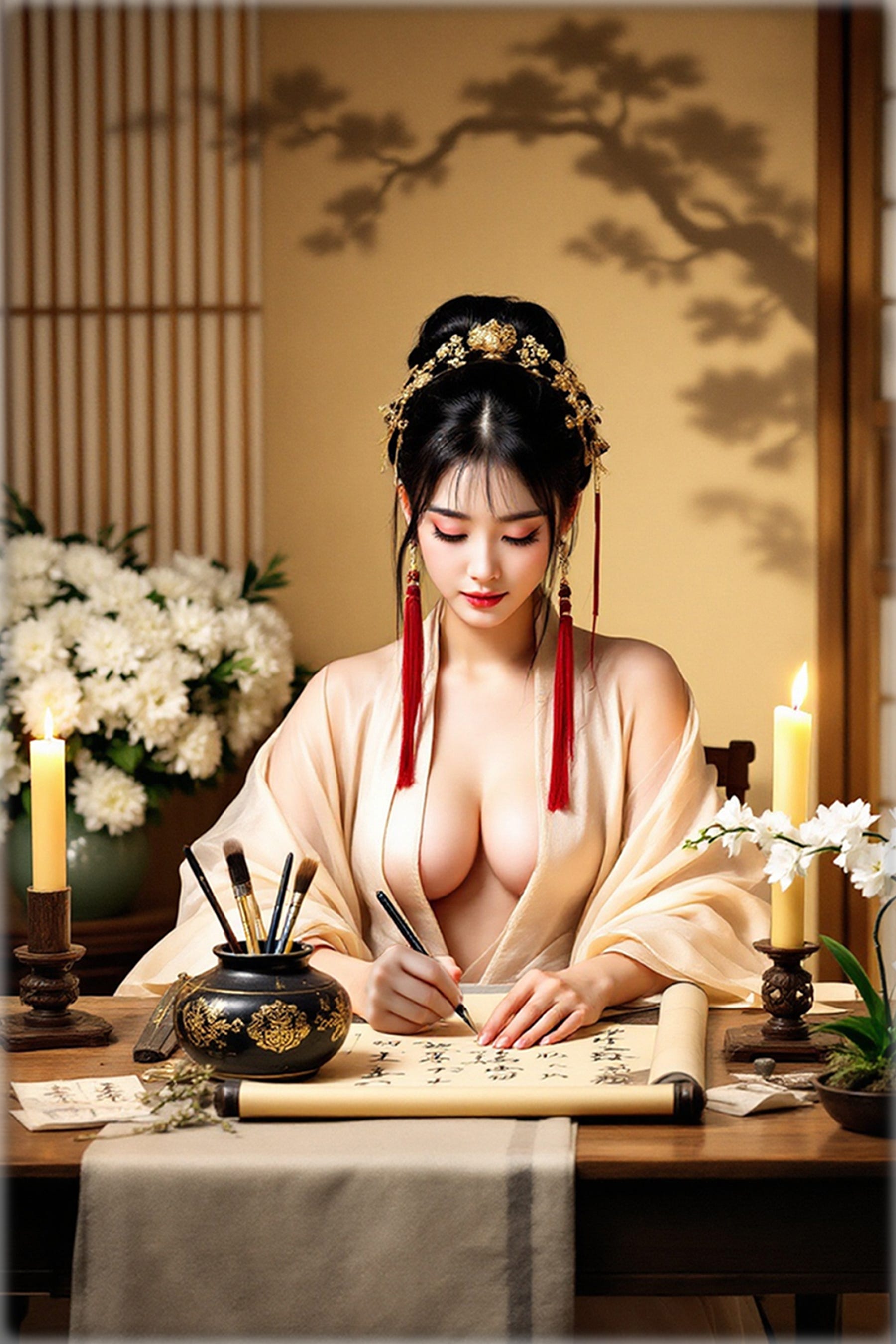
Wind song
carrying the scent of flowers to my sleeve,
	awakens me
on a pillow sweetly perfumed
	by a spring night’s dream.
Fujiwara no Shunzei no Musume
(Shunzei’s Daughter)
If you are a paid subscriber, you’ll find the link the volume below. Leave a comment or message me if you encounter any issues.
Keep reading with a 7-day free trial
Subscribe to Robin’s Art and Erotica Nest to keep reading this post and get 7 days of free access to the full post archives.